
★★★★★ Rated 5 stars by hundreds of smiling patients
Same-day emergency appointments available
Open Monday - Saturday

Home / Dental Services / Periodontal Care

PERSONALIZED CARE FOR HEALTHIER GUMS

Gum Disease and Periodontal Care in Toms River, NJ

Healthier Gums. Stronger Foundation for Your Smile.

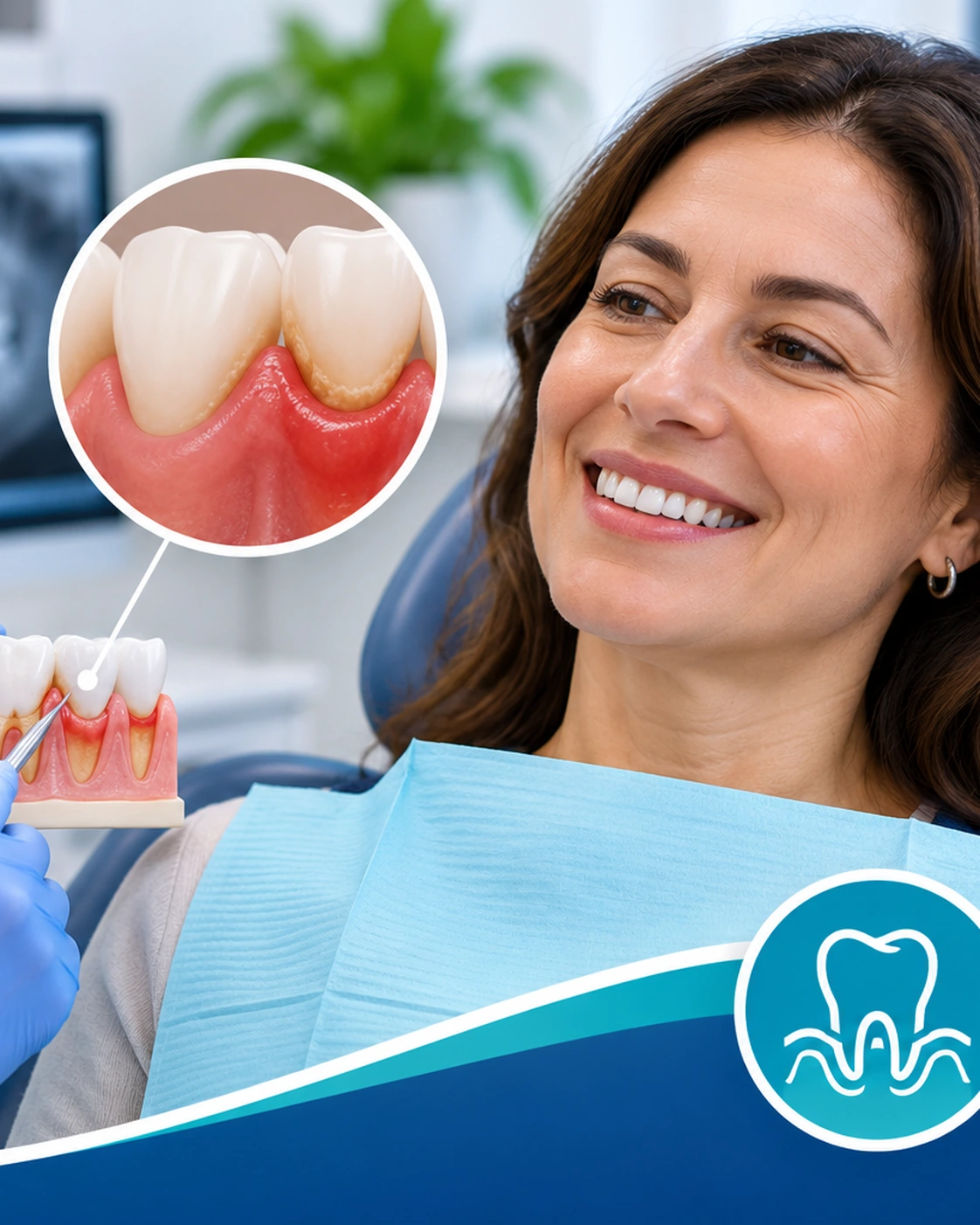
Sun Dental provides personalized gum disease treatment and periodontal care in Toms River, NJ. Our team evaluates your gum health, checks for signs of inflammation and periodontal disease, and discusses appropriate treatment options to help protect your gums, teeth, and supporting bone.

Gum Disease and Periodontal Care in Toms River, NJ
One practice. Every age.

Convenient care for the whole family

American Dental Association

Member dentists

Jersey's Choice Top Dentist

for 11 years including 2025

3 Dental Hygienists

Care for healthy smiles

Flexible Appointments

PPO plans & insurance accepted

A welcoming dental home for your family
RECOGNIZE THE SIGNS OF GUM DISEASE

Are You Suffering From a Periodontal Disease?

If you have been told you have periodontal disease, you’re not alone. Many adults in the U.S. currently have some form of the disease. Periodontal diseases range from simple gum inflammation to serious disease that results in major damage to the soft tissue and bone that support the teeth. In the worst cases, teeth are lost.

Whether your gum disease is stopped, slowed, or gets worse depends a great deal on how well you care for your teeth and gums every day, from this point forward. Contact Sun Dental!

Additional Practice Information

Convenient Hours, Day, Evening & Saturday

All Fees Explained Prior to Treatment

Insurance Assignment Accepted

Emergency Service Available

Additional Dental Services
  • Dental Implants
  • Cosmetic Dentistry
  • Sedation Dentistry
OUR Periodontal Care SERVICES

Explore Our Periodontal Care Services

Your gum exam helps us plan the next step. Explore the services below, with specialist referral when your care needs it.

PERIODONTAL CARE

Gum Disease Treatment

Red or sore gums can make daily tooth care uncomfortable. Your dentist checks for gum disease and explains which treatment may help protect the tissues that support your teeth. Early care can prevent further damage.

PERIODONTAL CARE

Scaling and Root Planing

Plaque and tartar can collect below the gumline, beyond the reach of your toothbrush. This treatment removes deposits from affected root surfaces to help control gum disease and improve gum health.

PERIODONTAL CARE

Periodontal Maintenance

After gum disease treatment, your mouth may need closer follow-up than a routine hygiene visit. Periodontal maintenance checks your gums and removes plaque deposits, with visits based on your needs.

PERIODONTAL CARE

Bone Grafting

Bone loss can affect the support around a tooth or the site for an implant. Your dentist assesses whether a bone graft may help and explains if specialist care is needed.

PERIODONTAL CARE

Soft Tissue Grafting

Receding gums can leave tooth roots exposed and cause sensitivity. A soft tissue graft may help cover selected areas, with an assessment to decide if the procedure suits your gum health.

UNDERSTANDING GUM DISEASE

What Causes Gum Disease?

Our mouths are full of bacteria. These bacteria, along with mucus and other particles, constantly form a sticky, colorless “plaque” on teeth. Brushing and flossing help get rid of plaque. Plaque that is not removed can harden and form “tartar” that brushing doesn’t clean. Only a professional cleaning by a dentist or dental hygienist can remove tartar. Two common forms of gum disease are gingivitis and periodontitis.

Early Gum Disease

Gingivitis

The longer plaque and tartar are on teeth, the more harmful they become. The bacteria cause inflammation of the gums that is called "gingivitis."

In gingivitis, the gums become red, swollen, and can bleed easily. Gingivitis is a mild form of gum disease that can usually be reversed with daily brushing and flossing, and regular cleanings by a dentist or dental hygienist.

This form of gum disease does not include any loss of bone and tissue that hold teeth in place.

Early Assessment Matters

Your dentist can check for early gum changes at an exam. Ask which home care steps suit your mouth and when to return.


Advanced Gum Disease

Periodontitis

In some cases, untreated gingivitis can progress to periodontitis, a more serious form of gum disease that affects the tissues and bone supporting the teeth.

As periodontitis develops, the gums may pull away from the teeth, creating spaces called periodontal pockets where bacteria and plaque can accumulate.

The body's immune response to these bacteria, along with bacterial toxins, can gradually damage the connective tissue and bone that hold teeth in place. Without proper treatment, this damage may eventually lead to loose teeth or tooth loss.

Treatment Helps Protect Your Teeth

If not treated, gum disease can destroy the bone and tissue that support the teeth. The teeth may eventually become loose and have to be removed.

Concerned About Your Gum Health?

Call us today if you're suffering from any of the above diseases. Schedule an evaluation with Sun Dental in Toms River, NJ, to discuss your gum health and treatment options.

UNDERSTANDING THE RISK FACTORS

Factors That Lead to the Development of Gum Diseases

Smoking

Need another reason to quit smoking? Smoking is one of the most significant risk factors associated with the development of gum disease. Additionally, smoking can lower the chances for successful treatment.

Hormonal Changes in Girls or Women

These changes can make gums more sensitive and make it easier for gingivitis to develop.

Diabetes

People with diabetes are at higher risk for developing infections, including gum disease.

Other Illnesses and Their Treatments

Diseases such as AIDS and its treatments can also negatively affect the health of gums, as can treatments for cancer.

Medications

There are hundreds of prescription and over-the-counter medications that can reduce the flow of saliva, which has a protective effect on the mouth. Without enough saliva, the mouth is vulnerable to infections such as gum disease. Some medicines can cause abnormal overgrowth of the gum tissue; this can make it difficult to keep teeth and gums clean.

Genetic Susceptibility

Some people are more prone to severe gum disease than others.

KNOW THE SIGNS & NEXT STEPS

Who Gets Gum Diseases?

Gum disease can affect people at different ages. Persistent gum symptoms need an exam at any age. Men are more likely to have gum disease than women. Although teenagers rarely develop periodontitis, they can develop gingivitis, the milder form of gum disease. Most commonly, gum disease develops when plaque is allowed to build up along and under the gum line.

Symptoms of gum disease include:

  • Bad breath that won’t go away
  • Red or swollen gums
  • Tender or bleeding gums
  • Painful chewing
  • Loose teeth
  • Sensitive teeth

Any of these symptoms may be a sign of a serious problem, which should be checked by a dentist. At your visit to Sun Dental, we will:

Ask about your medical history to identify underlying conditions or risk factors such as smoking that may contribute to gum disease.

Examine your gums and note any signs of inflammation.
Use a tiny ruler called a “probe” to check for and measure any pockets. In a healthy mouth, the depth of these pockets is usually between one and three millimeters. Tell the dentist or hygienist if the pocket check feels uncomfortable.
Our dentists or hygienists may also:

Take an X-ray to see whether there is any bone loss.
Refer you to a periodontist. Periodontists are experts in the diagnosis and treatment of gum disease and may provide you with treatment options that are not offered by our dentists.

YOUR GUM DISEASE TREATMENT OPTIONS

How is Gum Disease Treated?

The main goal of treatment is to control the infection. The number and types of treatment will vary, depending on the extent of the gum disease. Any type of treatment requires that the patient keep up good daily care at home. The doctor may also suggest changing certain behaviors, such as quitting smoking, as a way to improve treatment outcomes.

  1. Deep cleaning: Our dentists or dental hygienists remove the plaque through a deep-cleaning method called scaling and root planing. Scaling means scraping off the tartar from above and below the gum line. Scaling and root planing removes plaque and hardened deposits from affected root surfaces to help control periodontal inflammation.
  2. Medications: Antibiotics or other medications may be recommended in selected cases as an adjunct to periodontal treatment. They are not routinely necessary for every patient. Depending on how far the disease has progressed, our dentists may still suggest surgical treatment with medications. Listed below are some medications that are currently used.
  3. Flap Surgery: Surgery might be necessary if inflammation and deep pockets remain following treatment with deep cleaning and medications. A dentist may perform flap surgery to remove tartar deposits in deep pockets or to reduce pocket depth and make daily plaque control easier.
Periodontal Treatment Options

Medications Used in Gum Disease Treatment

Medications What Is It? Why Is It Used? How Is It Used?
Prescription Antimicrobial Mouthrinse A prescription mouthrinse containing an antimicrobial called chlorhexidine. To control bacteria when treating gingivitis and after gum surgery. Use the prescribed amount and schedule. Follow your dentist's instructions.
Antiseptic Chip A tiny piece of gelatin filled with the medicine chlorhexidine. To control bacteria and reduce the size of periodontal pockets. After root planing, it's placed in the pockets where the medicine is slowly released over time.
Antibiotic Gel A gel that contains the antibiotic doxycycline. To control bacteria and reduce the size of periodontal pockets. The dentist puts it in the pockets after scaling and root planing. The antibiotic is released slowly over a period of about seven days.
Antibiotic Microspheres Tiny, round particles that contain the antibiotic minocycline. To control bacteria and reduce the size of periodontal pockets. The periodontist puts the microspheres into the pockets after scaling and root planing. The particles release minocycline slowly over time.
Enzyme Suppressant A low dose of the medication doxycycline that keeps destructive enzymes in check. To reduce the activity of enzymes that can break down gum tissue. This medication is in tablet form. It is used in combination with scaling and root planing.
Oral Antibiotics Antibiotic tablets or capsules. For the short-term treatment of an acute or locally persistent periodontal infection. These come as tablets or capsules and are taken by mouth.

Preserving your natural teeth matters. We save your natural tooth whenever possible. Dentists explain the replacement options if required.

PERIODONTAL REGENERATION

Bone and Tissue Grafts

In addition to flap surgery, your periodontist or dentist may suggest procedures to help regenerate any bone or gum tissue lost to periodontitis. Bone grafting, in which natural or synthetic bone is placed in the area of bone loss, can help promote bone growth.

A technique that can be used with bone grafting is called guided tissue regeneration. In this procedure, a small piece of mesh-like material is inserted between the bone and gum tissue. This keeps the gum tissue from growing into the area where the bone should be, which can help bone and connective tissue regrow in suitable cases.

Since each case is different, it is not possible to predict with certainty which grafts will be successful over the long term. Treatment results depend on many things, including how far the disease has progressed, how well the patient keeps up with oral care at home, and certain risk factors, such as smoking, which may lower the chances of success.

Ask your dentist what the level of success might be in your particular case. Are you still in doubt? Contact us!

Gum Health Around Dental Implants

Dental implants need daily plaque control and regular checks. Peri-implantitis can damage the bone around an implant.

Discuss active gum disease before tooth replacement. The dental implants page explains that process.

ONGOING PERIODONTAL CARE

Routine Dental Care vs. Periodontal Maintenance

A routine hygiene visit supports oral health when active periodontitis is absent. Periodontal maintenance follows active treatment and includes professional plaque and tartar removal, with checks for recurrent disease.

Your dentist sets the recall interval based on your risk and treatment response. Some people need visits closer together than a standard preventive schedule.

  1. Gum recession: A lower gum margin can expose tooth roots and affect comfort.
  2. Pocket changes: The dentist compares measurements with prior records.
  3. Tooth mobility: A loose tooth needs an assessment of its support and bite.
  4. Home care: Your daily plaque control helps guide future advice.

After scaling and root planing, your dentist reassesses the sites. Persistent deep pockets may need more care or specialist referral.

The surgical and graft options above do not mean every procedure is available at this office. Your dentist can confirm the provider and location.

Soft tissue grafts may help selected gum recession sites. Bone grafts have different uses, such as periodontal defects or implant preparation.

YOUR NEXT STEP TOWARD HEALTHIER GUMS

Periodontal Care in Toms River: Your Next Step After Diagnosis

A Clear Path Forward

A gum disease diagnosis should come with a clear next step. You need to know which areas need care and how the dentist will check your response.

Periodontal care focuses on the gums, periodontal ligament, and supporting bone around the teeth. Gingivitis lacks the attachment loss that defines periodontitis.

Care Guided by Your Diagnosis

Sun Dental provides gum disease treatment in Toms River, NJ, with specialist referral when appropriate. Your diagnosis guides the next visit.

Ready to Take the Next Step?

Contact Sun Dental to discuss your gum health and arrange an assessment in Toms River, NJ.

our team

Meet the team behind your smile

Experienced, gentle, and genuinely invested in getting to know every patient who walks through our door.
PROUDLY SERVING OCEAN COUNTY

Periodontal Dental Care for Patients Across Ocean County

Our office sits at 224 Route 37 East, near the Ocean County Courthouse and minutes from the Community Medical Center. Free parking is available in front of the office.

Communities We Serve

  • Toms River
  • Brick
  • Jackson
  • Seaside Heights
  • Lavallette
  • Beachwood
  • Pine Beach
  • Berkeley Township
  • Manchester
Dental Emergencies

We reserve time each day for dental
emergencies. Call us for same-day care.

PATIENT'S COMMON QUERIES

Frequently Asked Questions

Find answers to some of the most common questions our patients ask about periodontal care.

Can Gum Disease Affect Younger Adults?

Gingivitis can occur at many ages, and younger adults can also develop periodontitis. Symptoms and an exam matter more than age alone. Ask for an assessment if you notice gum changes.

Daily plaque control helps, but it does not remove hardened tartar below the gum. Periodontitis needs professional assessment and care. Bone lost to the disease does not regrow from home care alone.

Gum disease can progress with little pain. Tender gums or persistent bad breath can be clues, but some people notice few changes. Dental records help detect disease before a tooth becomes loose.

Antibiotics are not routine for every case. The dentist selects them only when the diagnosis and treatment plan support their use. The medication table above describes options rather than a prescription for every patient.

A loose adult tooth or pus around the gums needs prompt dental advice. Facial swelling or fever may signal an urgent infection. Trouble with breathing or swallowing requires emergency medical care.

Smiling Sun Dental patient

Request a Periodontal Assessment in Toms River

Patients from Beachwood and Brick can request care at the Toms River, New Jersey, office. Take your medicine list and prior gum treatment records.

Scroll to Top