
You brush your teeth every day, yet your dentist still finds a cavity. It can feel frustrating, especially when you take good care of your mouth. But cavities have more causes than poor dental hygiene alone.
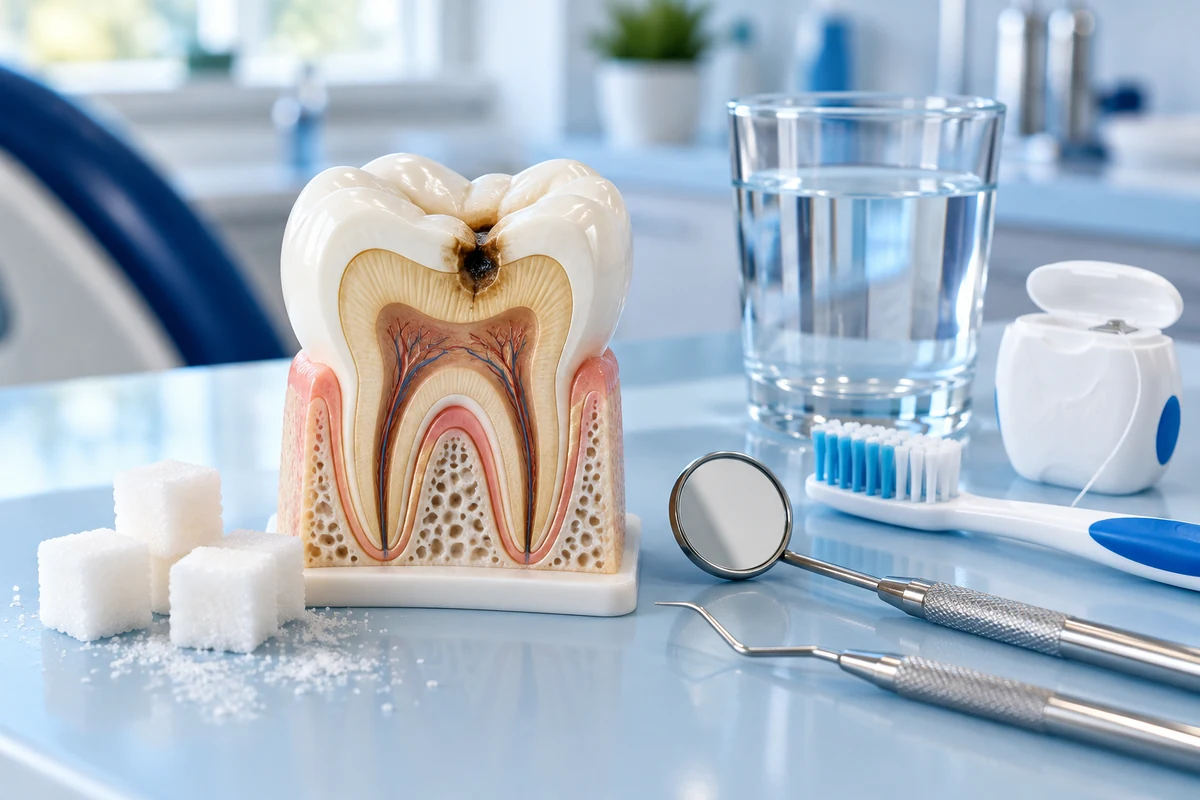
What causes cavities? Cavities develop when bacteria in your mouth feed on sugars and starches, then produce acids that weaken tooth enamel. Over time, repeated acid exposure can create a small hole in the tooth. Your diet and saliva also affect how quickly this happens.
Tooth decay often starts without pain. By the time you notice a problem, the damage may already need dental treatment.
How Do Cavities Form in Your Teeth?
Your mouth naturally contains bacteria. Some are harmless, while others contribute to tooth decay. These bacteria collect in a sticky film called dental plaque, also known as bacterial plaque.
When you eat foods that contain sugar or starch, plaque bacteria produce acids. These acids cause enamel demineralization, or mineral loss from the hard outer layer of your teeth.
The process happens gradually:
- Plaque develops: Bacteria collect on the tooth surface.
- Acids attack enamel: Bacteria use carbohydrates to produce acids that remove minerals.
- Enamel becomes weaker: Repeated acid exposure causes further mineral loss.
- A cavity develops: The damaged enamel may eventually break down and form a hole.
According to the National Institute of Dental and Craniofacial Research, early enamel damage may improve with fluoride and minerals from saliva. Once a hole forms, the tooth usually needs professional repair.
What Are the Main Causes of Tooth Decay?
Several habits and oral health conditions increase your risk of tooth decay. Some are easy to change, while others need help from your dentist.
1. Frequent Sugar and Starch Consumption
Sugar is a major contributor to cavities, but candy is not the only concern. Foods such as crackers and bread also contain carbohydrates that oral bacteria can use to produce acid.
Each time you consume these foods, your teeth may face another acid attack. Frequent snacks can leave less time for saliva to help restore lost minerals.
The American Dental Association explains that frequent sugar consumption increases dental caries risk.
2. Poor Oral Hygiene
Plaque collects on your teeth every day. If you do not remove it, bacteria remain on your teeth and can produce acids when sugars or starches are available.
People who skip their nighttime dental care routine may leave plaque and food debris on their teeth for hours.
Brush twice daily with fluoride toothpaste. You should also clean between your teeth once a day, since a toothbrush cannot reach every surface.
3. Dry Mouth and Low Saliva Production
Saliva does more than keep your mouth moist. It helps neutralize acids and provides minerals that protect enamel. When saliva production decreases, your teeth become more vulnerable to decay.
Some medications cause dry mouth. Certain medical conditions can also reduce saliva production.
If your mouth often feels dry, tell your dentist. The cause may need medical attention or changes to your oral care routine.
4. Inadequate Fluoride Exposure
Fluoride helps enamel resist acid damage. It also supports the repair of early mineral loss before a physical hole develops. People who rarely use fluoride toothpaste may have less protection against decay.
Your dentist can assess whether you need additional fluoride based on your cavity history and oral health.
5. Deep Grooves in Back Teeth
Your molars have narrow grooves on their bite surfaces. These grooves can also trap plaque. Even people who brush regularly may have trouble cleaning deep pits on their back teeth.
Dental sealants can protect these surfaces. Your dentist can assess whether sealants are appropriate for you or your child.
Why Do I Keep Getting Cavities Even Though I Brush?
Some people develop repeated cavities despite a consistent oral care routine. If this sounds familiar, the problem may involve more than how often you brush.
Consider these possible causes:
- Frequent snacks: Sugary or starchy snacks can expose your teeth to acids more often.
- Dry mouth: Reduced saliva limits your mouth’s natural protection.
- Hard-to-reach areas: Plaque may remain between teeth or around dental work.
- Inadequate fluoride: Your enamel may receive less protection against acid attacks.
- Exposed tooth roots: Gum recession can leave softer root surfaces vulnerable to decay.
Even teeth with old restorations can develop new cavities. Plaque may collect near a damaged dental filling and contribute to decay.
If you often develop cavities, ask your dentist to assess your personal risk factors rather than assume poor hygiene is the only cause.
Are There Foods That Cause Cavities?
People often blame candy for tooth decay, but your daily food habits also affect your risk.
Food or drink | Why it may increase cavity risk |
Candy and sweets | Provide sugar that bacteria use to produce acid |
Soda and sweetened drinks | Expose teeth to sugar, often over long periods |
Crackers and chips | Contain starches that bacteria can use |
Dried fruit | Can cling to teeth and provide sugar |
Fruit juice | Contains sugars that cavity-causing bacteria can use; its acidity may also contribute to enamel erosion |
You do not have to avoid every sweet food. Try to limit frequent snacks and choose water instead of sweetened drinks between meals.
The time between meals also matters. It allows saliva to help restore minerals lost during acid exposure.
What Are the Early Signs of Cavities?
Tooth decay symptoms may not appear at first. Some people have cavities without noticeable pain.
You may notice:
- White spots: Areas of mineral loss may appear on the enamel.
- Tooth sensitivity: Cold or sweet foods may cause discomfort.
- Visible holes: Advanced decay may leave an opening in the tooth.
- Dark spots: Some cavities appear brown or black, although stains can look similar.
- Toothache: Persistent pain may suggest deeper decay.
A white spot does not always mean you have a cavity. Likewise, a dark stain does not automatically indicate tooth decay.
A dentist can examine the affected area and determine whether treatment is necessary.
Can Cavities Heal Naturally Without a Dentist?
This depends on how far the tooth decay has progressed.
Early tooth decay can sometimes be stopped or reversed through remineralization before a cavity forms. Fluoride and minerals from saliva can help restore weakened enamel through remineralization.
Once a cavity forms, lost tooth structure does not grow back naturally. A dental professional usually needs to repair the damaged area.
Avoid home remedies that promise to close cavities. They cannot replace missing tooth structure. Your dentist may recommend fluoride treatment for early decay or a restoration for more advanced damage.
How Are Dental Cavities Treated?
Your cavity treatment options depend on the size and location of the cavity.
- Early tooth decay: If the enamel remains intact, your dentist may recommend fluoride and closer observation.
- Small or moderate cavities: A dentist usually removes the decayed tissue and repairs the tooth with a dental filling.
- Larger cavities: A tooth with extensive damage may require a dental crown to restore its structure.
- Decay that affects the dental pulp: If the inner tissue becomes infected or badly inflamed, root canal treatment may help preserve the tooth.
Early treatment can often reduce the amount of dental work you need.
How to Prevent Cavities and Tooth Decay
You cannot remove every bacterium from your mouth, but you can reduce the conditions that allow cavities to develop.
Follow these practical habits:
- Brush twice daily: Use fluoride toothpaste and a soft toothbrush.
- Floss every day: Remove plaque from areas your toothbrush cannot reach.
- Limit frequent sugar exposure: Reduce snacks and sweetened drinks between meals.
- Drink water: Water helps rinse food debris from your mouth.
- Visit your dentist regularly: Routine exams help identify early decay.
Ask your dentist about fluoride treatments or dental sealants if you have a higher cavity risk.
The CDC’s cavity prevention guidance also supports fluoride use and preventive dental care.
You can find additional advice in these dental health tips.
Get Dental Cavity Treatment in Toms River, NJ
A cavity may start small, but untreated decay can eventually damage deeper parts of your tooth. If you notice sensitivity or suspect a cavity, a dental examination can help identify the cause.
Sun Dental provides preventive dental care and restorative treatments for patients in Toms River, New Jersey. The practice offers dental fillings to repair teeth affected by decay.
Patients from Brick and Beachwood in Ocean County can visit the office at 224 Rte 37E, Toms River, NJ 08753.
You can request an appointment with a dentist in Toms River, NJ, to have your teeth examined and discuss suitable treatment options.
Frequently Asked Questions
1. Can Cavities Form Even If You Brush Twice a Day?
Yes, cavities can develop despite regular brushing. Frequent sugar exposure and dry mouth may increase your risk. Your dentist can help identify why you continue to develop tooth decay.
2. How Fast Do Cavities Form?
Cavities usually develop over time, but the exact rate varies. Your diet and saliva affect how quickly enamel loses minerals. Some areas of decay progress faster than others.
3. Are Cavities Contagious?
You can pass some oral bacteria to another person through saliva, but a cavity itself is not contagious. Tooth decay develops when harmful bacteria produce acids that damage enamel over time.
4. Can a Cavity Go Away on Its Own?
Early mineral loss may reverse before a hole forms. Once the tooth has a physical cavity, the missing structure cannot grow back naturally. A dentist can determine whether the tooth needs a restoration.
5. Do Cavities Always Cause Tooth Pain?
Many cavities cause no pain during their early stages. Sensitivity or toothache may appear as decay reaches dentin, the layer beneath enamel, or deeper parts of the tooth. Regular dental exams help identify problems before noticeable symptoms develop.